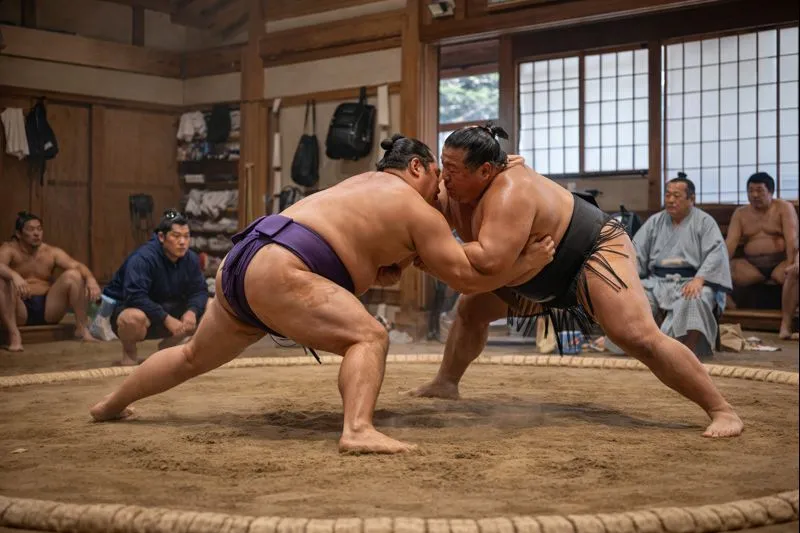
Why Morning Keiko Is Unlike Anything Else
Tournament matches are theatre. Morning practice — keiko — is the opposite: no crowd, no ceremony, no referees. Just wrestlers colliding at full force in a small tatami room at 7 AM while their stable master watches in silence. The sound of two 160 kg bodies making contact three metres from you doesn't leave.
During the March Haru Basho, many Tokyo-based stables temporarily relocate to Osaka. That three-week window, roughly mid-February through tournament end, is when stable visits become accessible to guided-tour visitors.
The Four Stables Worth Knowing
Not all stables allow visitors, and access changes year to year depending on the stable master's preference. These four have the strongest track record for guided tours in Osaka.
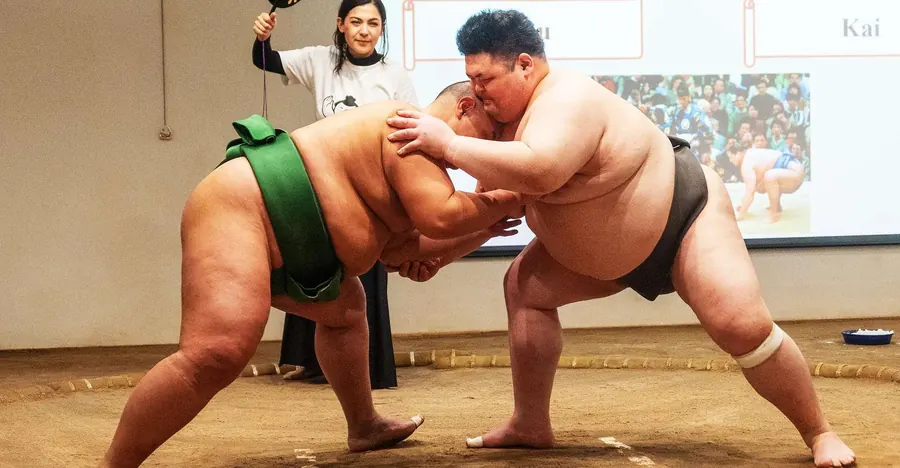
Kise Stable — Suita
Home of crowd-favourite Ura — the 5'7" acrobatic fighter who beats wrestlers twice his size with technique. Watching him drill at close range is a genuinely different experience to seeing him on the tournament broadcast. One of the most-requested stables on every guided tour list.
Best year-round match: Watch retired professionals perform live, learn sumo history from an English MC, then step into the ring and challenge a real wrestler yourself.
⭐ 4.9 · 468 reviews · 1.5 hrs · from $76 · Free cancellation
Step Into the Ring →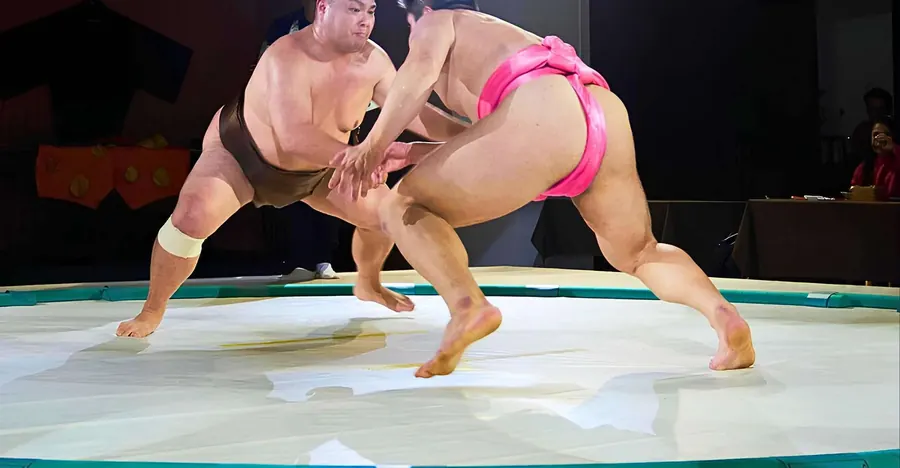
Isenoumi Stable — Matsubara
Known among guides for its welcoming, traditional atmosphere and Osaka-born wrestlers including Ikioi. Visitors who come here tend to want to understand sumo — the culture, the diet, the daily structure — not just see bodies in motion. The stable obliges. Genuinely educational.
Best year-round match: Osaka's most-booked sumo experience. Train basics with a former wrestler, try sumo yourself in the ring, finish with authentic chanko nabe. Kids under 6 free.
⭐ 4.5 · 1,348 reviews · 1.5–2 hrs · from $63 · Free cancellation
Train & Eat Chanko →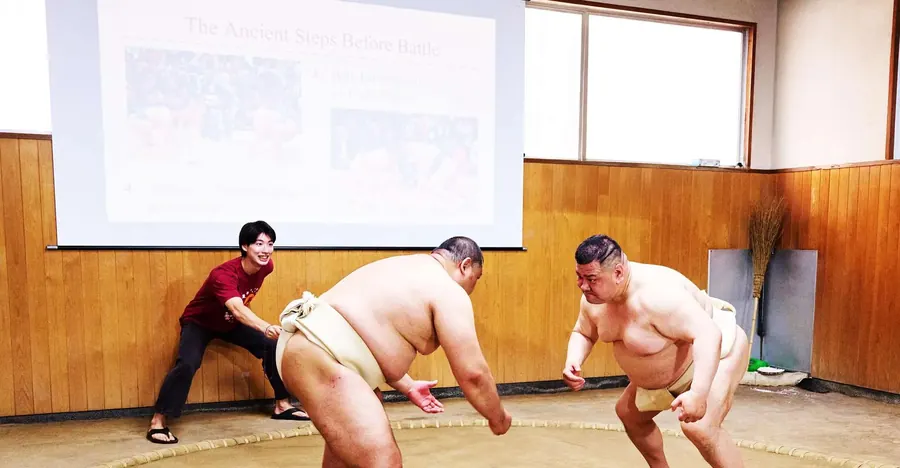
Sakigawa Stable — Neyagawa
The stable of former Ozeki Gōeidō, an Osaka native who turned EDION Arena into his personal fortress during peak years. Tournament visitors come here for that local-hero atmosphere — the closest thing to watching sumo with a Naniwa crowd. High energy, deeply Osakan.
Best year-round match: Live sparring matches narrated in English, the full ritual breakdown, then a photo with a real wrestler. The most electric evening sumo in the city.
⭐ 4.7 · 29 reviews · 1.5 hrs · from $76 · Free cancellation
See Live Sparring →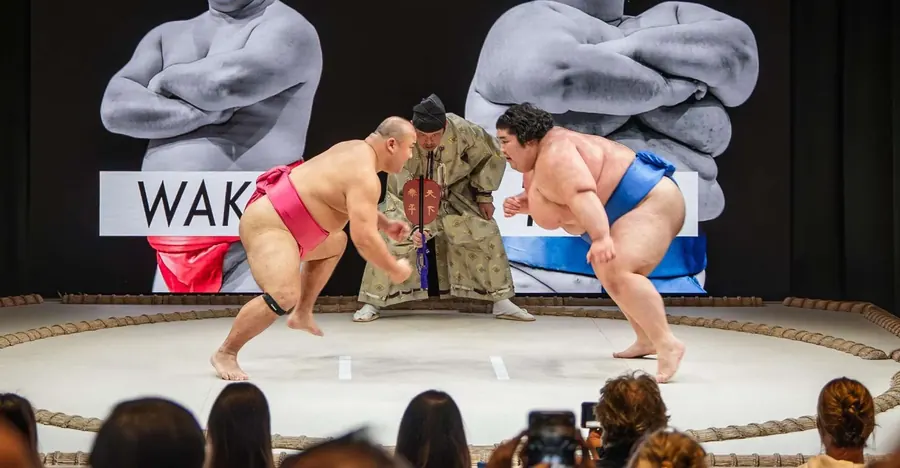
Takekuma Stable
Notable for occasionally opening to spectators at its Osaka practice quarters — sometimes even in the build-up period before the main tournament window. Less reliably accessible than the other three, but worth checking with your tour guide. The atmosphere is more informal when it does open.
Best year-round match: The premium Osaka sumo show. Retired wrestlers on an elevated stage in Namba Parks, live demo bouts, full photo session — with bento box or snack included.
⭐ 4.3 · 383 reviews · 1 hr · from $92 · Namba Parks 8F
Book Hirakuza Show →How to Get Into a Stable: Tours vs. Going Direct
Stables are active homes and training centres, not visitor attractions. Access is a privilege, not a right. There are two realistic paths:
Option 1: Book a Guided Tour (Recommended)
A guided morning practice tour handles everything that would otherwise block you: communication with the stable, transport from central Osaka (usually Namba), an English-speaking guide who explains the drills, ranks, and rituals as they happen, and the etiquette briefing you need before entering. Without a guide, you are unlikely to gain access at all.
GetYourGuide and Viator both list Osaka sumo morning practice tours. Look for tours explicitly naming the stable or at minimum guaranteeing a real heya visit (not just a demonstration space).
Browse Morning Practice Tours →Option 2: Direct Access
Stables occasionally open first-come, first-served during late February and early March at their Osaka lodgings — often a temple, shrine, or rented hall. This requires Japanese language ability to find the correct location and communicate appropriately. There is no reservation, no guarantee, and no English support. For most foreign visitors this path leads to frustration rather than a stable.
Etiquette: The Rules That Actually Matter
Stables open as a courtesy. One rude visitor closes the door for everyone after them. The rules below are not suggestions:
Absolute Silence
No talking. No whispering. No commentary to your travel companion. Phones off or on silent — a notification sound during practice is an immediate ejection. You are observing a working professional environment, not attending a show.
- Stay seated, stay back: Sit cross-legged at the rear of the room. Do not stand, pace, or stretch your legs toward the dohyo.
- Photography: Non-flash photos are usually permitted — confirm with your guide before entering. Video is strictly prohibited at most stables.
- Dress modestly: No shorts, no loud prints. Remove shoes at the entrance and place them neatly.
- Entering: Bow at the doorway and say o-jama shimasu (I am intruding) softly as you enter. This is standard Japanese etiquette for entering any private space.
- Leaving: Wait for a natural pause in practice before moving to exit. Do not leave mid-drill.
What Actually Happens During Keiko
- 6:30–10:00 AM: Practice window. Junior wrestlers start earliest, senior wrestlers and sekitori arrive later. Guided tours typically enter around 7:30–8:30 AM to catch the full-intensity session.
- What you'll see: Shiko (leg-stomping warm-up), butsukari-geiko (full-force collisions against a stationary opponent), moshi-ai-geiko (winner-stays bouts). The sound of impact in an enclosed room is genuinely shocking the first time.
- No interaction: Do not speak to or approach wrestlers. Photo opportunities after practice, if they happen at all, are at the stable master's discretion.
- Duration of viewing: 60–90 minutes inside the stable. Tours add transport time; expect a 3-hour morning total.
Not Visiting in March? Year-Round Alternatives
Stable visits are only possible during the tournament season. If you're in Osaka outside of March, these three alternatives deliver a genuine sumo experience — interactive, English-friendly, and available any day of the year.
Step Into the Ring
Watch a live show with retired wrestlers, learn history from an English MC, then challenge a real rikishi in the ring yourself. The highest-rated sumo experience in Osaka by a clear margin.
⭐ 4.9 · 468 reviews · from $76 · Free cancellation
Book Sumo Studio Experience →Train, Try Sumo & Eat Chanko
Osaka's most-booked sumo experience. Learn sumo basics, step into the dohyo, and finish with chanko nabe hot pot. Best value option, family-friendly with kids under 6 free.
⭐ 4.5 · 1,348 reviews · from $63 · Free cancellation
Book Sumo + Chanko Tour →Hirakuza Premium Show
The Sumo Hall Hirakuza in Namba Parks: elevated stage, retired professionals, live demo bouts, bento box included. The most theatrical sumo show in Osaka — no prior knowledge needed.
⭐ 4.3 · 383 reviews · from $92 · Namba Parks 8F
Book Hirakuza Tickets →2026 Haru Basho Results
Kirishima won the 2026 tournament with a 12–2 record, clinching his third Emperor's Cup and Ozeki promotion. Full standings, key storylines, and tournament recap.
Tournament Results →Why Book a Guided Sumo Tour?
Going solo means Japanese-only booking sites, language barriers, and no context for what you're watching. Here's what a guide actually changes — and when it's worth paying the premium.
Read the Guide →